Active Directory Identity Enrichment
You can provide extended data for identities in Custom Query reports or create identity reports for security principals in Active Directory.
Determining Prerequisites
-
File Reporter collects Active Directory identity data once per day by default.
For instructions on running a collection manually, see Active Directory Identity Scans in the File Reporter 24.1 Administration Guide.
-
Decide whether you wish to extend an existing Custom Query file system metadata or permissions report or if you wish to report just on Active Directory identities themselves.
-
If extending an existing Custom Query report determine whether that report data already includes the owner or permissions trustee Security Identifiers (SIDs) or GUIDs.
-
If reporting solely on Active Directory identities, determine which of the extended attributes to include in the report.
See the table and view definitions for ad.domains, ad.ds_objects, and ad.ds_objects_view for details on available attributes.
-
Designing the Report
This example extends a "Direct User Assignment" Custom Query report which identifies user accounts that have been assigned permissions directly to folders (as opposed to using group membership) and shows a summary of the count of direct permissions per user by share path.
-
From the Start menu, launch the File Reporter 24.1 Report Designer.
-
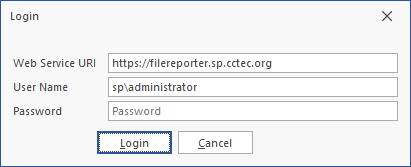
Enter the login credentials and click Login.

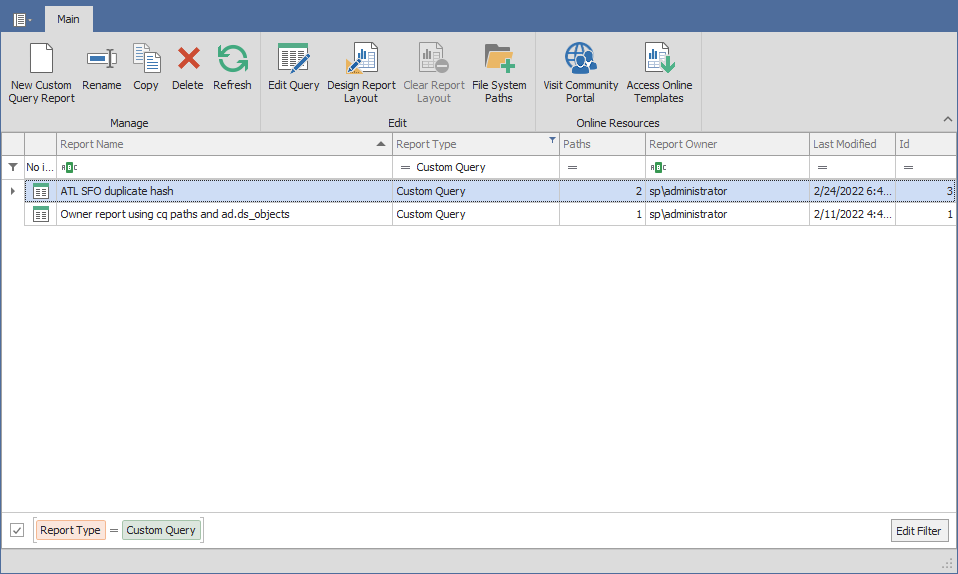
All of your saved Custom Query reports are listed.
-
Click New Custom Query, give it a name, then click Create.
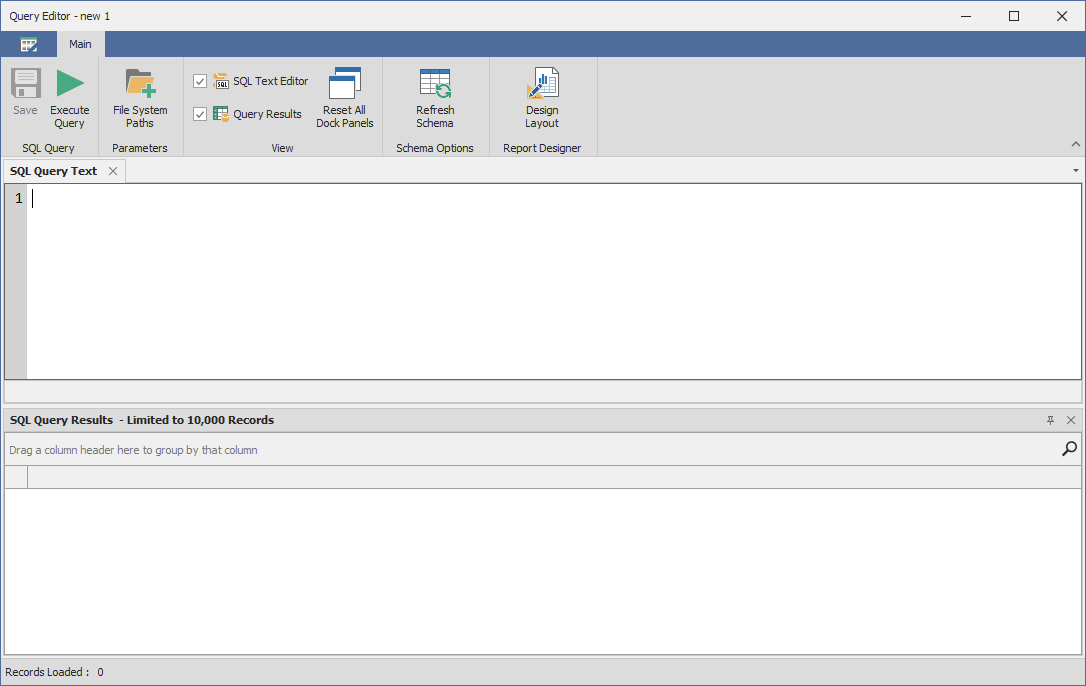
The Report Designer Query Editor is launched.

-
Enter the following SQL statements into the Query Editor:
CopyBasic Query - User Direct Permissions SummarySELECT
ace.trustee_display_name,
ace.scan_target,
COUNT(*) AS ace_count
FROM srs.current_ntfs_aces AS ace
WHERE ace.trustee_type = 1
AND ace.ace_flags & 16 <> 16
GROUP BY
ace.trustee_display_name,
ace.scan_target -
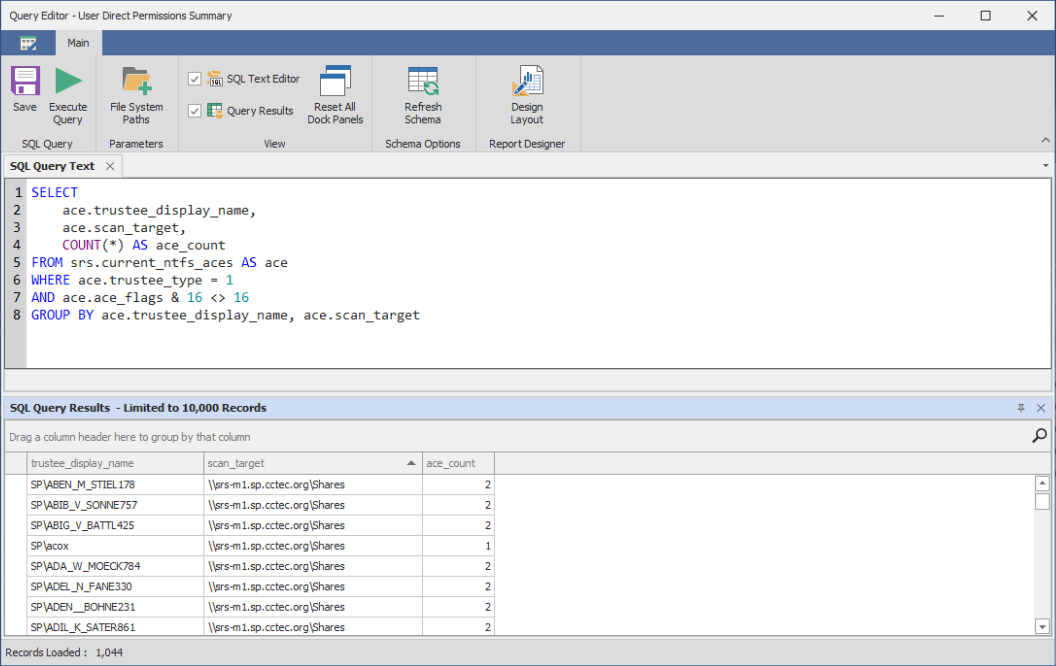
Click Execute to see a preview of the report data.
This query will produce a basic result similar to the following:

-
Click Save to save the SQL entered so far.
-
Augment the data by joining with the ad.ds_objects table to include the Active Directory user display_name and title fields.
CopyEnhanced Query - User Direct Permissions SummarySELECT
dso.display_name,
dso.title,
ace.trustee_display_name,
ace.scan_target,
COUNT(*) AS ace_count
FROM srs.current_ntfs_aces AS ace
JOIN ad.ds_objects AS dso
ON dso.object_sid = ace.sid
WHERE ace.trustee_type = 1
AND ace.ace_flags & 16 <> 16
GROUP BY
ace.trustee_display_name,
ace.scan_target,
dso.display_name,
dso.title -
Click Execute and see the updated results that include the title and display_name fields.